Step 1
How to Identify Your Skin Tone
Before diving into colour palettes, understand where you fall on the spectrum. Indian skin tones are broadly classified into four categories:
- Fair / Light: Porcelain to light beige with pink or peachy undertones.
- Wheatish / Medium: Golden or honey-beige — the most common Indian skin tone — with warm undertones.
- Dusky / Olive: Warm caramel to olive with yellow-green undertones.
- Deep / Dark: Rich mahogany to deep ebony with reddish-brown or neutral undertones.
To check your undertone, look at the veins on your inner wrist in natural light. Blue-purple veins → cool undertones. Green veins → warm undertones. Both → neutral. This undertone distinction refines your colour choices within each category.
Skin Tone 01
Best Saree Colors for Fair / Light Skin Tone
Fair / Light Skin
Porcelain to light beige · Pink or peachy undertones
Fair skin has a natural luminosity that pairs beautifully with bold, deep, and jewel-toned sarees. The high contrast between the saree and your skin makes rich colours pop dramatically.
Best Saree Colors to Wear
Navy Blue
Bottle Green
Deep Purple
Mustard Gold
Magenta
Teal
Rust Brown
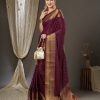
A deep red Banarasi silk saree or a jewel-toned teal tissue saree will make fair skin look porcelain-perfect. Classic bridal maroon and deep burgundy are perennial favourites for weddings.
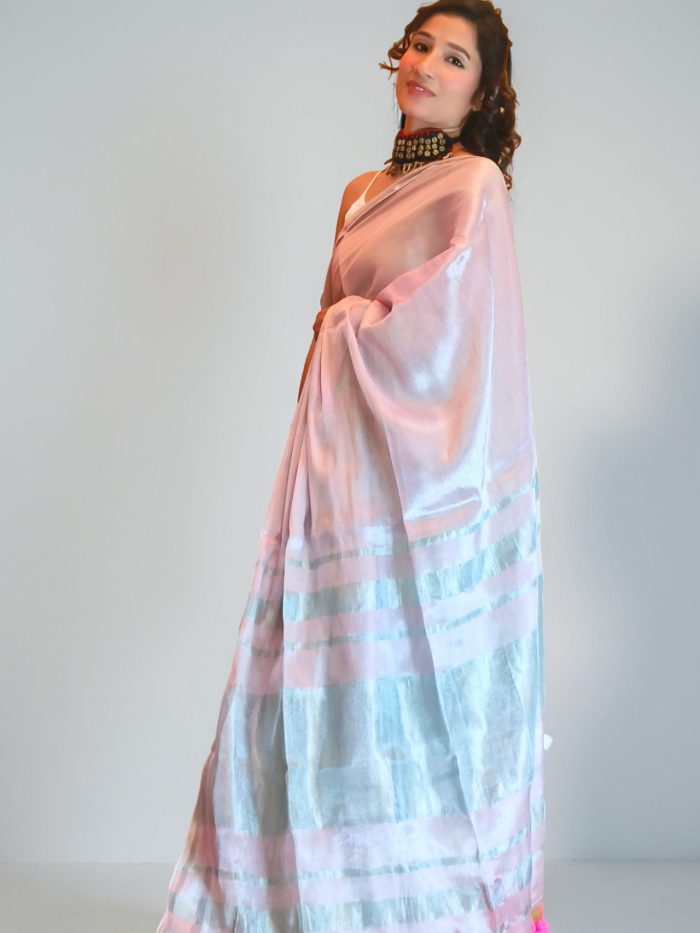
Pastel sarees — baby pink, lavender, mint — work for fair skin only when the fabric has sheen (silk, tissue, organza) or when paired with a contrasting deep-coloured blouse. Matte pastels on very fair skin can look washed out.
Best Saree Colors for Wheatish / Medium Skin Tone
Wheatish / Medium Skin
Golden or honey-beige · Warm undertones
Wheatish is arguably the most versatile Indian skin tone — you can carry almost everything! The golden warmth in wheatish skin is enhanced by earthy, warm, and warm-jewel-tone sarees.
Best Saree Colors to Wear
Burnt Orange
Tomato Red
Emerald Green
Antique Gold
Turmeric
Dusty Rose
Chocolate Brown
Golden yellows and turmeric hues are extraordinary on wheatish skin — the warm undertones in both the skin and the colour create a harmonious radiance. Satyugi’s tissue sarees with golden zari borders are especially flattering for this tone.
Earthy tones like terracotta, copper, and rust are trending in 2025 and suit wheatish skin brilliantly. Pair with antique gold jewellery for a cohesive ethnic look.
Best Saree Colors for Dusky / Olive Skin Tone
Dusky / Olive Skin
Warm caramel to olive · Yellow-green undertones
Dusky skin has a natural warmth and depth that glows magnificently in vibrant, saturated, and bold colours. The olive undertone is a secret superpower — it makes fiery and jewel-toned sarees look spectacular.
Best Saree Colors to Wear
Bright Yellow
Scarlet Red
Electric Violet
Peacock Green
Saffron
Bright Fuchsia
Electric Blue
Dusky skin and bright, bold colours are a match made in heaven. Saffron, bright orange, and electric blue create a stunning contrast. A vibrant Ajrakh or mul cotton saree in deep indigo or rich orange is perfect for dusky skin tones.
Metallic shades — silver, bronze, and antique gold — also look stunning on dusky skin, especially for evening events and weddings.
Best Saree Colors for Dark / Deep Skin Tone
Deep / Dark Skin
Rich mahogany to deep ebony · Reddish-brown or neutral undertones
Deep skin tones are among the most regal in the world. Bold, vivid, and high-contrast colours celebrate the richness of deep skin — making it look luminous and powerful at every event.
Best Saree Colors to Wear
Crisp White
Hot Pink
Flame Red
Lime Green
Tangerine
Royal Purple
Silver
Crisp white sarees — whether a handwoven cotton or a tissue silk — look absolutely breathtaking on deep skin tones. Similarly, bright gold, vivid lime green, and hot pink create eye-catching contrast and radiance. A bright designer saree in white or gold is a showstopper at weddings and festivals.
Metallics deserve special mention — a silver or gold tissue saree elevates deep skin like nothing else, catching every beam of light in a celebration-worthy way.
How Fabric Affects Saree Color Appearance
The same colour can look completely different depending on the fabric. Understanding this is key to making the right purchase, especially when shopping for a designer saree online at Satyugi.
- Silk sarees: The natural sheen of silk intensifies colours, making them appear richer and deeper. Deep red on silk looks luxurious and festive.
- Tissue sarees: The semi-transparent metallic weave creates a luminous quality. Light colours on tissue look ethereal; dark colours look dramatic.
- Mul Cotton sarees: Matte finish softens colours, giving them a more earthy, relaxed appearance — ideal for daytime and casual wear.
- Georgette / Chiffon sarees: The drape and movement add dynamism. Flowy fabrics make bold colours look lighter and softer.
- Organza sarees: The crispness and slight translucency of organza makes colours look clean and contemporary.
- Ajrakh / Block-print sarees: Earthy pigments and indigo blues look authentic and grounded — best suited for warm and dusky skin tones.
Satyugi Shopping Tip
Satyugi.in specialises in handcrafted sarees across fabric types — from tissue and mul cotton to Ajrakh and linen weaves. Each product page includes detailed fabric care instructions and multiple photos to help you see the true colour before buying.
Context Matters
Choosing Saree Colors by Occasion
Beyond skin tone, the event you are dressing for also shapes your colour choice. Here is a quick breakdown:
Wedding Sarees
Traditional reds, pinks, and maroons dominate bridal wear in North India, while South Indian brides gravitate towards gold-bordered silks in bright yellow, green, or cream. Guests can opt for jewel tones — sapphire blue, emerald green, or royal purple — to complement the celebration without competing with the bride. Browse Satyugi’s wedding saree collection for handpicked options.
Festival Sarees (Diwali, Navratri, Durga Puja)
Navratri follows the traditional nine-colour calendar, while Diwali calls for warm festive tones — gold, orange, red, and fuchsia. Cotton and tissue sarees in these shades balance comfort with celebration.
Office & Daily Wear Sarees
Subtle, sophisticated tones work best — dusty rose, slate blue, olive green, or soft mauve. Pair with a solid-coloured blouse and minimal jewellery for a polished professional look. Mul cotton and linen sarees are ideal for breathable office wear.
Party & Evening Sarees
Metallics, deep jewel tones, and rich embellished fabrics work best for evening occasions. A silver tissue saree or a heavily zari-woven deep blue Banarasi will turn heads at any cocktail or dinner event.
Quick Skin Tone–Color Reference Table
| Skin Tone | Best Colors | Best Fabrics | Avoid |
|---|---|---|---|
| Fair / Light | Deep red, navy, bottle green, magenta, teal, mustard | Silk, tissue, organza | Very pale creams, matte off-whites |
| Wheatish / Medium | Golden yellow, burnt orange, emerald green, dusty rose, antique gold | Tissue, cotton silk, linen | Neon shades, cold pale yellows |
| Dusky / Olive | Vibrant orange, saffron, scarlet red, electric blue, peacock green | Mul cotton, Ajrakh, georgette | Dark browns, very dark grey |
| Deep / Dark | Bright gold, crisp white, hot pink, flame red, silver, royal purple | Tissue, silk, organza | Plain solid black, deep navy without embellishment |
Pro Styling Tips to Elevate Any Look
1. Use Your Blouse as a Color Accent
A contrasting blouse can completely transform a saree’s effect on your skin. A deep maroon blouse with a golden tissue saree creates drama for wheatish skin; a white blouse with a deep teal saree pops brilliantly on fair skin.
2. Match Jewellery Metal to Your Undertone
Warm undertones (wheatish, dusky) → gold jewellery. Cool undertones (fair with pink hues) → silver or platinum jewellery. Deep skin → both gold and silver work beautifully.
3. The Power of the Saree Border
A contrasting border adds a frame to the drape. Zari gold borders on any colour elevate the saree regardless of skin tone. A wide border on deep skin tones creates a beautiful graphic effect.
4. Consider the Lighting of the Event
Daylight photography and stage lighting amplify brightness — opt for slightly muted versions of bold colours for outdoor daytime events, and go all-out bold or metallic for evening functions.
5. Trust Handcrafted Authenticity
Handcrafted sarees from artisan weavers have organic colour depth that mass-produced fabrics lack. A hand-block-printed Ajrakh or hand-woven tissue saree carries natural dye variation that photographs beautifully against all skin tones. Satyugi’s handcrafted collection is curated with exactly this philosophy in mind.
Confidence is always the best accessory. Wear the colour that makes you feel powerful and beautiful — the tips above are a guide, not a rulebook. Indian skin tones are diverse and glorious in their own right.
Conclusion
Choosing the right saree colour is an art that blends colour theory, personal undertones, fabric knowledge, and occasion context. Whether you have a fair, wheatish, dusky, or deep complexion, there is a palette of stunning hues waiting to celebrate your beauty.
The key takeaways: deep jewel tones flatter fair skin; warm earthy hues enhance wheatish skin; vibrant saturated colours electrify dusky skin; and bold contrasting shades like white, gold, and fuchsia make deep skin glow regally.
Ready to find your perfect colour match? Explore Satyugi’s curated range of designer sarees for women online — from handcrafted tissue and mul cotton to Ajrakh block prints — and drape yourself in a colour that was made for you.